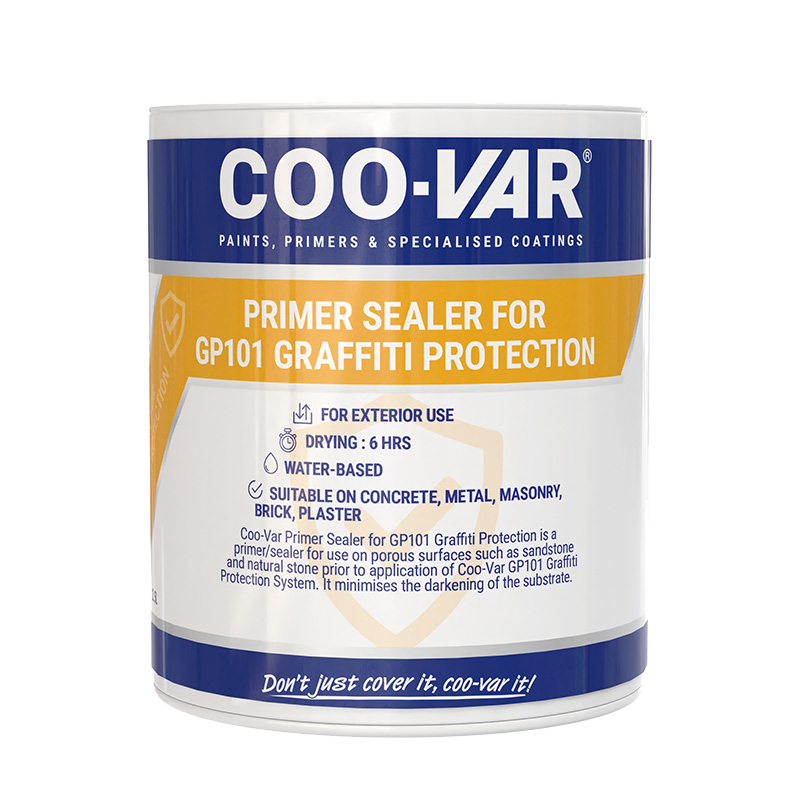
What is Sealer Coat for GP101?
Sealer Coat for GP101 is basically a preparatory primer/sealer used before applying Coo-Var’s GP101 Graffiti Protection System — when the surface you want to protect is porous.
How does Sealer Coat for GP101 work?
• The “Sealer Coat for GP101” is a clear, water-based acrylic sealer designed specifically for porous surfaces (e.g. brick, natural stone, concrete, rough masonry) — surfaces where GP101 alone might otherwise soak in rather than forming a consistent protective film.
• By sealing the pores, it prevents absorption of the subsequent GP101 coating into the substrate. This helps ensure that the GP101 layer actually forms a proper, even, continuous protective film on top.
• Because it reduces absorption, you avoid “loss” of expensive anti-graffiti coating into the masonry — in other words, you get more reliable coverage, prevent waste, and often reduce how much GP101 you need.
• The sealer also brings additional benefits: it improves water and mildew resistance of the surface, helping protect the substrate (e.g. stone, brick) from dampness or fungus — which is especially useful for outdoor or exposed masonry walls.
• It helps preserve the natural appearance of porous materials (e.g. preventing sandstone or brick from darkening unevenly when coated).
How many coats of Sealer Coat for GP101 do I need?
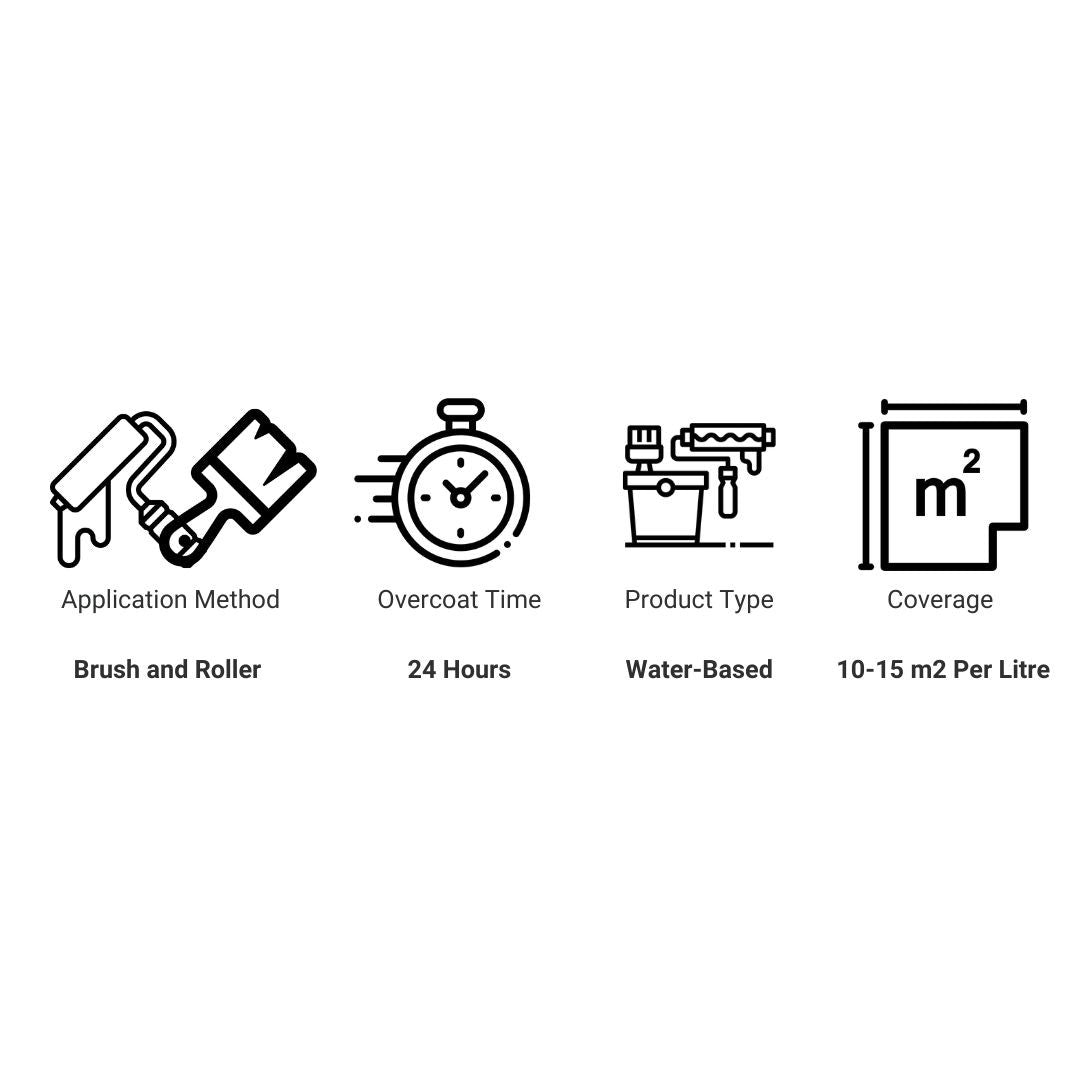
It depends a little on how porous the surface is — but according to the technical data for Coo-Var “Sealer Coat for GP101”, a single coat is normally enough when applied correctly.
You might consider a second coat if:
• The substrate is very porous/highly absorbent – In which case the first coat may soak in significantly and not leave a proper film on the surface.
• You see the sealer soaking in too quickly, leaving patchy or dull coverage – a second thin coat could help ensure full sealing and even film build-up.
We recommend starting with one even coat (not too thick), applied evenly with a brush or short-pile roller as per instructions.
Once dry, inspect for uniform film: If some areas appear to soak the sealer more (e.g. deeper porosity), consider applying a second coat.
Do I need to prime the surface before applying Sealer Coat for GP101?
You do not need a separate primer underneath the Sealer Coat in the typical sense. The Sealer Coat itself is the primer/sealer when dealing with porous surfaces.
Can I use Sealer Coat for GP101 on any surface?
No. You should only use it on compatible surfaces, such as:
- Brick
- Concrete
- Masonry
- Plaster
- Metal
Is Sealer Coat for GP101 safe to use?
Yes. This is a water-based single-pack product, free of volatile organic solvents, and does not require a professional for its application.
Can Sealer Coat for GP101 go over previously painted surfaces?
While its main purpose is to “seal porous surfaces” we would not advise placing over previously painted surfaces.
Can I repaint over Sealer Coat for GP101?
Realistically we would not advise painting over the Sealer Coat for GP101 unless doing so with our Coo-Var GP101 Graffiti Protection System, as intended.
Does Sealer Coat for GP101 come in different colours?
The Sealer Coat for GP101 is only available in a Clear colour option.
What maintenance is required for Sealer Coat for GP101?
• Periodic cleaning — remove dirt, grime, moss/algae, or any buildup with gentle cleaning (water and mild detergent, if safe). Because the sealer is water-resistant, regular gentle washing helps keep the surface looking good and prevents trapped moisture or dirt.
• Inspect for damage or wear — especially on corners, edges, joints or high-traffic/exposed zones (for exterior walls). Look for signs like cracking, flaking, peeling, or patches where the seal may have worn off.
• Check adhesion of topcoat (if applied) — if you used GP101 over the sealer, check that the topcoat remains bonded well. If you see peeling or lifting, the sealer may need reinstating or surface prep might be required before reapplication.
• Re-seal/recoat if underlying surface becomes exposed — if wear or damage exposes the bare masonry/stone/concrete again, the protective barrier is compromised. The manufacturer’s guidance suggests reapplying the sealer (or full protection system) when the substrate becomes exposed.
• Avoid harsh cleaning chemicals or solvents — many sealed/anti-graffiti systems warn against using strong solvents or abrasive cleaners, because they can damage the sealing layer. In the case of GP101 sealer + topcoat, maintenance guidance for the topcoat explicitly says graffiti removal should be done using water (i.e. no solvents) to avoid damaging the coating.
What are some creative uses for Sealer Coat for GP101?
Here are some examples of its creative uses:
- Custom Decorative Floors
- Encapsulating Artwork or Memorabilia
- Enhancing Wood Projects
- DIY Countertop Transformations
- Outdoor Art or Garden Projects
- Strengthening 3D Prints
- Anti-Graffiti or Easy-Clean Surfaces (e.g. Murals, shop signs, high-touch wall areas)